As of January 1, 2026, the safety landscape for California’s construction industry has undergone its most significant regulatory shift in a decade. Cal/OSHA has officially implemented the full weight of the 2026 Confined Space Standards for Construction. While many contractors have historically treated confined spaces as a “general industry” concern, these new, construction-specific mandates acknowledge the unique, ever-changing nature of worksites.
For the men and women working in trenches, manholes, crawl spaces, and silos, these regulations are more than just red tape—they are life-saving protections. For an injured worker, these standards represent a powerful legal tool. If an employer fails to meet these strict 2026 requirements, they aren’t just being “negligent”; they are violating a specific statutory duty of care that can significantly bolster a construction accident lawsuit.
What Defines a Confined Space in 2026?
The updated standards provide a clearer, more inclusive definition of what constitutes a “confined space” on a construction site. Under the 2026 Cal/OSHA confined space construction standards, a space is regulated if it meets three specific criteria:
- It is large enough and so configured that an employee can bodily enter it.
- It has limited or restricted means for entry or exit (such as a ladder, narrow hatch, or crawl-way).
- It is not designed for continuous employee occupancy.
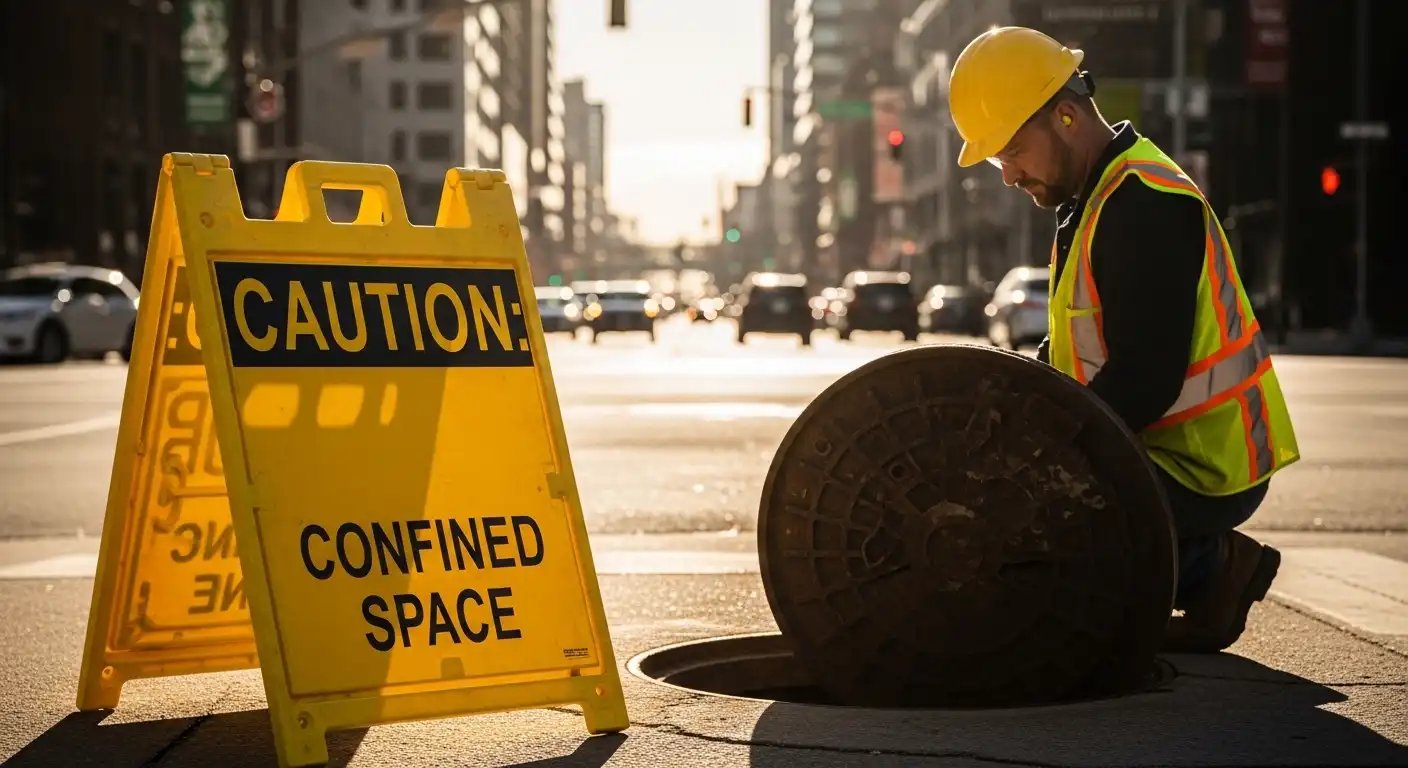
Common examples found on California jobsites include utility vaults, sewers, storm drains, HVAC ducts, water mains, and even certain types of pre-cast concrete structures during the assembly phase. The 2026 rules emphasize that as a building progresses, a space that was once “open” may become “confined” due to the installation of walls or equipment, requiring constant re-evaluation by the employer.
The “Competent Person” Rule: The Core of Your Legal Claim
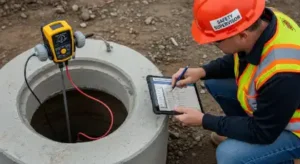
Perhaps the most critical addition in the 2026 update is the mandatory role of the “Competent Person.” Before any work begins on a site containing confined spaces, the employer must designate a person capable of identifying existing and predictable hazards. This individual must have the authority to take prompt corrective measures to eliminate them.
From a personal injury perspective, this is a game-changer. In many personal injury claims, the defense argues that a hazard was “unforeseeable.” However, if a Competent Person failed to conduct an initial survey or failed to identify a manhole as a permit-required space, the “unforeseeable” defense vanishes. The law now mandates that they must see it coming.
Permit-Required Confined Spaces (PRCS)
Not all confined spaces are created equal. The 2026 standards distinguish between a basic confined space and a Permit-Required Confined Space (PRCS). A space requires a permit if it contains any of the following:
- A hazardous atmosphere (oxygen deficiency, toxic fumes, or flammable gases).
- Material with the potential to “engulf” an entrant (soil, sand, or water).
- An internal configuration that could trap or asphyxiate an entrant (converging walls or a sloped floor).
- Any other recognized serious safety or health hazard.
If you were sent into a PRCS without a written permit, atmospheric testing, and a dedicated attendant, your employer has committed a “Serious” violation of Cal/OSHA standards. This violation is often the “smoking gun” needed to secure a settlement that goes beyond standard Workers’ Compensation.
Coordination on Multi-Employer Worksites
Construction sites are rarely managed by a single company. There are general contractors, subcontractors, and independent specialists. Historically, this led to a “blame game” where no one took responsibility for confined space safety. The 2026 rules put an end to this by codifying coordination requirements:
- The Host Employer: Must share information about known confined spaces with the General Contractor.
- The Controlling Contractor (General Contractor): Has the primary responsibility to coordinate all entry operations when multiple employers are working in or near a confined space.
- The Entry Employer (Subcontractor): Must inform the Controlling Contractor of their entry program and any hazards they created or encountered while in the space.
This “chain of safety” means that if you are a subcontractor’s employee, we may be able to hold the General Contractor liable for your injuries if they failed to properly coordinate the site’s safety plan.
Proving Liability: The “Fatal Four” in Confined Spaces
When our firm investigates a confined space injury, we look for violations related to what safety experts call the “Fatal Four” risks. Under the 2026 standards, an employer’s failure to prevent these is a major indicator of liability:
1. Atmospheric Hazards
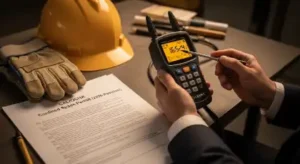
In 2026, “I didn’t know the air was bad” is no longer a valid excuse. Employers are required to perform continuous or periodic atmospheric testing. If you suffered from oxygen deprivation or toxic exposure, we will demand to see the gas monitor calibration logs for that day.
2. Engulfment and Entrapment
This is particularly common in trenching and excavation. If a space is not properly “shored” or shielded, and a collapse occurs, it is a direct violation of both confined space and trenching standards. This often leads to high-value wrongful death claims.
3. Mechanical and Electrical Hazards
Before a worker enters a mixer, silo, or duct, all mechanical and electrical energy must be “Locked Out/Tagged Out.” If a machine was accidentally turned on while you were inside, the 2026 standards provide a clear path to proving gross negligence.
4. Communication and Rescue Failures
The 2026 law mandates that every permit-entry must have an “Attendant” standing outside. This person’s only job is to monitor the entrants. If the attendant was distracted or doing other chores when you were injured, the employer is liable for a failure of the rescue protocol.
Why You Need a Construction Injury Specialist
The insurance companies for general contractors are already training their adjusters on how to minimize 2026 Cal/OSHA claims. They will try to claim the space wasn’t “technically” confined, or that you were the one who failed to check the air. They are looking to protect their bottom line, not your recovery.
As a specialized Construction Injury Lawyer, we speak the language of Cal/OSHA. We know how to depose a “Competent Person” to expose gaps in their training. We know how to subpoena communication logs between contractors to prove they knew about a hazard but did nothing to warn you.
Conclusion: Demand Accountability
The 2026 Cal/OSHA Confined Space Standards were written to prevent tragedies. When an employer ignores these rules to save time or money, they are gambling with your life. You have the right to a safe worksite, and when that right is violated, you have the right to full and fair compensation.
If you or a loved one has been injured in a confined space accident, the clock is ticking. Evidence on a construction site disappears as the project moves forward. Contact us today for a free, no-obligation consultation, and let us put the power of the 2026 safety standards to work for you.