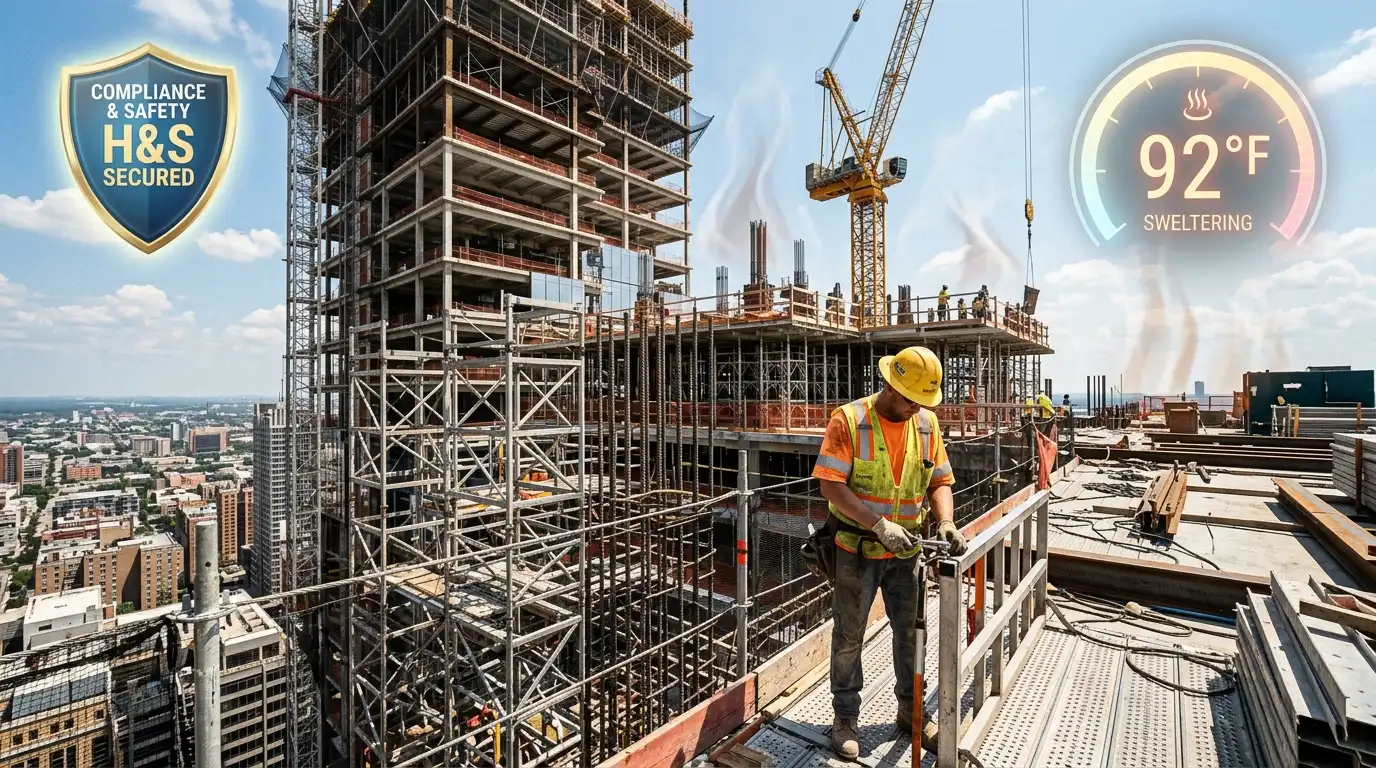
Introduction: The Unseen Trigger in Construction Falls and Crashes
When a construction worker falls from a scaffold, slips off a roof frame, or misjudges heavy equipment clearance, insurance adjusters and site supervisors are quick to assign blame to human error. Terms like “clumsiness,” “momentary loss of balance,” or “failure to follow safety tie-off procedures” dominate incident reports. However, beneath many catastrophic construction accidents lies a severe, biologically overwhelming catalyst: environmental heat stress.
Under extreme heat conditions, physiological exhaustion triggers heat syncope (fainting), cognitive impairment, disorientation, and acute delirium. A worker suffering from heat-induced cognitive degradation loses motor control and decision-making capabilities seconds before a fall or equipment collision occurs.
With the federal implementation of the Occupational Safety and Health Administration’s (OSHA) Heat Injury and Illness Prevention Standard (29 CFR 1910.148), the legal landscape governing heat hazards has changed. No longer can general contractors and subcontractors treat heat exhaustion as an unpredictable “act of nature.” By establishing explicit statutory mandates for heat monitoring, rest breaks, and hydration, OSHA’s standard provides injured workers and personal injury attorneys with a concrete framework to prove employer negligence and third-party liability in heat-induced construction accidents.
Understanding the Science: How Heat Delirium Causes Jobsite Disasters
To successfully establish legal liability following a jobsite fall or heavy machinery incident, it is essential to understand how environmental heat impacts human physiology long before classic heatstroke sets in.
1. Cognitive Degradation and Loss of Fine Motor Control
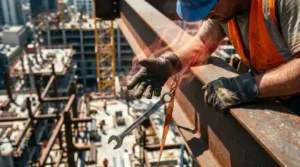 When body core temperatures exceed normal thresholds, blood flow is redirected from core organs and the brain to the skin surface in an attempt to dissipate heat. This circulatory shift causes rapid central nervous system fatigue. Clinical symptoms include delayed reaction times, blurred vision, loss of spatial awareness, and severe dizziness.
2. Heat Syncope and Delirium on High-Risk Work Surfaces
On elevated surfaces such as scaffolding, structural steel beams, or roof trusses, even a momentary drop in blood pressure (heat syncope) causes sudden blackouts or loss of balance. When heat stress progresses to delirium, workers experience confusion, short-term memory loss, and irrational behavior—such as unhooking safety lanyards or misinterpreting signals from crane operators.
Core Requirements of OSHA’s Federal Heat Standard
OSHA’s heat standard imposes mandatory, legally enforceable obligations on employers across general industry and construction settings. The standard operates under a two-tiered trigger system based on the local Heat Index or Wet Bulb Globe Temperature (WBGT):
A. The Initial Heat Trigger (80°F Heat Index)
When jobsite heat exposure reaches or exceeds an 80°F heat index for more than 15 minutes in any hour, employers are statutorily required to execute baseline preventative measures:
- Cool Drinking Water Access: Providing readily accessible, cool drinking water at a minimum rate of 1 quart per hour per worker.
- Shaded or Air-Conditioned Rest Areas: Establishing designated break areas shielded from direct sunlight or equipped with active cooling/air conditioning.
- Mandatory Acclimatization Protocols: Implementing gradual workload escalation for new hires and returning workers (e.g., limiting new workers to 20% of full shift exposure on Day 1).
- Written Heat Injury & Illness Prevention Plan (HIIPP): Maintaining a site-specific written plan designating trained Heat Safety Coordinators to monitor real-time weather metrics.
B. The High Heat Trigger (90°F Heat Index)
When site conditions cross the 90°F high heat threshold, additional mandatory safety controls go into effect:
- Mandatory Paid Rest Breaks: Enforcing mandatory paid rest breaks of at least 15 minutes every 2 hours.
- Active Employee Observation: Operating a mandatory “buddy system” or continuous supervisory monitoring to detect early warning signs of heat distress.
- Pre-Shift Hazard Alerts: Distributing mandatory hazard warnings prior to work shifts reminding crews of hydration, break rights, and emergency response steps.
Proving Employer Negligence and Subcontractor Liability
In construction injury claims, demonstrating that a fall or collision was caused by heat-induced cognitive impairment requires connecting OSHA standard violations directly to the incident’s physical chain of causation.
1. Establishing Negligence Per Se and Breaches of Duty
Under statutory negligence principles, an employer’s failure to abide by safety regulations created to prevent a specific type of harm serves as direct evidence of a breach of duty. If a general contractor fails to provide shade, omits mandatory 15-minute rest breaks during a 95°F afternoon, or fails to enforce acclimatization schedules, any resulting heat-induced fall constitutes a foreseeable breach of statutory care.
2. Third-Party Liability Beyond Workers’ Compensation
While standard workers’ compensation laws often insulate a worker’s direct employer from civil tort lawsuits, construction sites involve multi-employer worksites. A general contractor (GC) or property developer owes a non-delegable duty to maintain safe site conditions.
If a GC fails to coordinate overall site heat safety plans, cuts off water supplies to subcontractor trades, or refuses to adjust project deadlines during extreme heat waves, injured subcontractor employees can file third-party personal injury lawsuits against the GC for direct negligence.
Key Evidence to Subpoena in Heat-Related Construction Lawsuits
Building an unassailable heat-injury lawsuit requires preserving contemporaneous jobsite data before records are altered or discarded. Key evidentiary targets include:
| Evidentiary Category | Specific Documents & Records to Subpoena | Legal Relevance in Litigation |
|---|---|---|
| Jobsite Environmental Logs | On-site WBGT meter readings, local National Weather Service (NWS) historical logs, and digital temperature sensors. | Establishes whether the 80°F or 90°F OSHA heat triggers were crossed at the time of the crash or fall. |
| Written HIIPP & Coordinator Logs | The site-specific Heat Injury and Illness Prevention Plan and designated Heat Safety Coordinator inspection notes. | Proves whether the employer established mandatory compliance protocols or merely maintained paper-only policies. |
| Payroll & Rest Break Audits | Timecard timestamps, digital badge-in/badge-out logs, and supervisory rest break enforcement records. | Demonstrates whether mandatory 15-minute paid rest breaks were provided or denied to meet tight project deadlines. |
| Hydration & Shade Verification | Material purchase receipts for water delivery, shade canopy deployment logs, and site staging photos. | Confirms whether adequate cooling infrastructure was physically present in the immediate work zone. |
External Strategic Legal References
 For detailed statutory rules, enforcement guidelines, and medical research on occupational heat stress, review these authoritative resources:
- For official statutory text and federal regulatory details, visit the Occupational Safety and Health Administration (OSHA) Official Web Portal.
- To examine medical criteria for heat-related illness prevention and WBGT monitoring guidelines, consult the National Institute for Occupational Safety and Health (NIOSH).
- For federal appellate case law regarding multi-employer worksite liability doctrines, refer to the Occupational Safety and Health Review Commission (OSHRC).
Conclusion: Enforcing Accountability for Preventable Jobsite Accidents
Heat-induced falls and heavy equipment crashes are not unpreventable accidents; they are predictable consequences of systemic employer negligence during extreme weather conditions. OSHA’s federal heat standard transforms heat safety from a discretionary choice into a rigid legal obligation.
By conducting thorough investigations into jobsite thermal conditions, rest break enforcement, and acclimatization protocols, injured construction workers can expose regulatory violations, overcome employer defenses, and secure full financial recovery for catastrophic injuries.