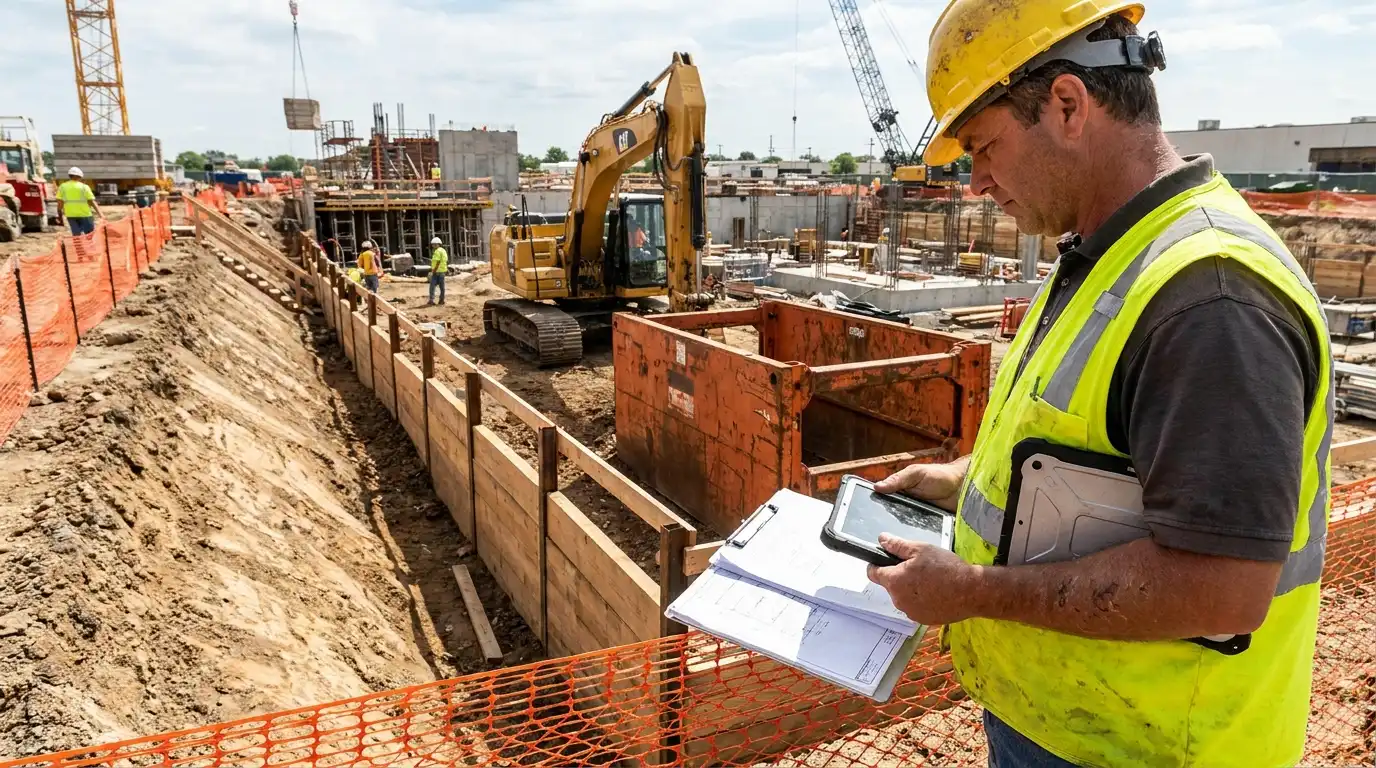
1. The Primary Causes of Trench Collapses and Shoring Failures
Federal safety guidelines require strict engineering controls whenever workers enter trenches that are five feet or deeper. Despite clear regulatory parameters, excavation cave-ins remain a recurring killer on construction sites. Trench failures typically stem from systemic site management errors and inadequate hazard assessments:
- Failure to Install Protective Systems: Omitting required protective systems—such as sloping, benching, shoring, or trench shield boxes—is the leading cause of soil collapses.
- Improper Soil Classification: Soil stability varies drastically based on type (Type A, B, or C soil), moisture content, previous disturbance, and environmental exposure. Misclassifying soil often leads to using inadequate shoring systems for unstable ground conditions.
- Spoil Pile Misplacement: Stacking excavated dirt (spoil piles) or heavy equipment directly at the edge of an open trench adds tremendous surcharge load, forcing unstable soil walls to cave inward.
- Vibration and Environmental Factors: Nearby heavy traffic, operating backhoes, or sudden rainfall can rapidly compromise trench wall integrity, causing sudden structural collapses.
Under safety regulations enforced by the Occupational Safety and Health Administration (OSHA) Trenching and Excavation Standards, a designated “competent person” must inspect excavations daily prior to worker entry and as site conditions change throughout the shift.
2. Understanding Third-Party Liability in Excavation Accidents
In standard workplace accident scenarios, workers’ compensation laws protect direct employers from personal injury lawsuits. However, multi-employer construction sites involve numerous independent companies working alongside one another. If an entity other than your direct employer caused or contributed to the trench collapse, you can file a third-party personal injury claim.
Potential third parties held accountable in trench collapse lawsuits include:
- General Contractors and Construction Managers: General contractors oversee overall job site safety and schedule sequencing. If a general contractor fails to enforce site-wide safety protocols or forces sub-contractors into un-shored trenches to meet tight deadlines, they can face direct legal liability.
- Geotechnical and Structural Engineers: Third-party engineering firms retained to analyze soil mechanics, design shoring systems, or conduct site inspections can be held liable if flawed engineering calculations or negligent inspections cause a collapse.
- Equipment Rental Companies and Manufacturers: If a rented trench shield, hydraulic shoring jack, or trench box suffers from structural design flaws, manufacturing defects, or improper maintenance, the equipment manufacturer or leasing company may be liable under product liability laws.
- Subcontractors and Utility Companies: Negligent excavation by another trade contractor—such as striking an unmarked water main or destabilizing adjacent soil—can trigger a disastrous trench failure.
As detailed in comprehensive analyses published by the NIOSH Trenching and Excavation Hazards Center, identifying third-party negligence is vital for securing complete financial compensation beyond basic statutory benefit caps.
3. The Shockwave of Injuries Caused by Trench Collapses
The crushing mass of dirt in an excavation collapse inflicts severe, permanent physical trauma. Even when rescue crews extricate trapped workers quickly, victims often face long-term medical complications, including:
A. Traumatic Asphyxiation and Anoxia
When soil engulfs a worker’s torso, the sheer weight prevents the chest wall from expanding. Even if a worker’s nose and mouth remain clear of dirt, the inability to breathe causes rapid oxygen deprivation, resulting in permanent brain damage or fatal asphyxiation within minutes.
B. Crush Injuries and Compartment Syndrome
Extreme pressure on muscle tissue and blood vessels stops blood circulation to the limbs. Upon release of the pressure, toxins flood the bloodstream, leading to severe kidney failure, systemic organ breakdown, or necessary limb amputations.
C. Multiple Fractures and Internal Organ Damage
The violent force of falling soil or failing steel shoring boxes frequently causes severe spinal column fractures, shattered pelvic bones, collapsed lungs, and internal hemorrhaging.
4. Distinguishing Workers’ Comp Benefits from Third-Party Damages

Understanding the difference between workers’ compensation claims and third-party personal injury lawsuits is critical for injured workers and surviving family members. Pursuing both legal avenues maximizes financial recovery following a catastrophic excavation incident:
- Workers’ Compensation Coverage: Provides no-fault coverage for reasonable medical care and partial reimbursement for lost wages (typically two-thirds of weekly pay). Workers’ comp does not provide financial recovery for physical pain, suffering, disfigurement, or emotional distress.
- Third-Party Personal Injury Damages: Allows injured workers to recover 100% of uncollected lost wages, future lost earning capacity, lifelong medical care costs, home modifications, physical pain and suffering, loss of enjoyment of life, and emotional trauma.
5. Steps to Protect Your Rights After an Excavation Injury
Building a successful third-party liability claim after a trench collapse requires immediate, decisive action to preserve physical evidence before site conditions are altered:
First, seek immediate emergency medical care and ensure that all injuries, including internal crushing trauma and emotional shock, are thoroughly documented by medical professionals.
Second, ensure the incident is reported to OSHA and local law enforcement. Take detailed photographs of the trench, the soil piles, missing or damaged trench boxes, nearby machinery, and weather conditions if possible.
Finally, contact a dedicated construction injury attorney immediately. An experienced legal team will dispatch independent forensic engineers, preserve electronic site logs, subpoena soil reports, and hold all negligent third parties fully accountable for your injuries.