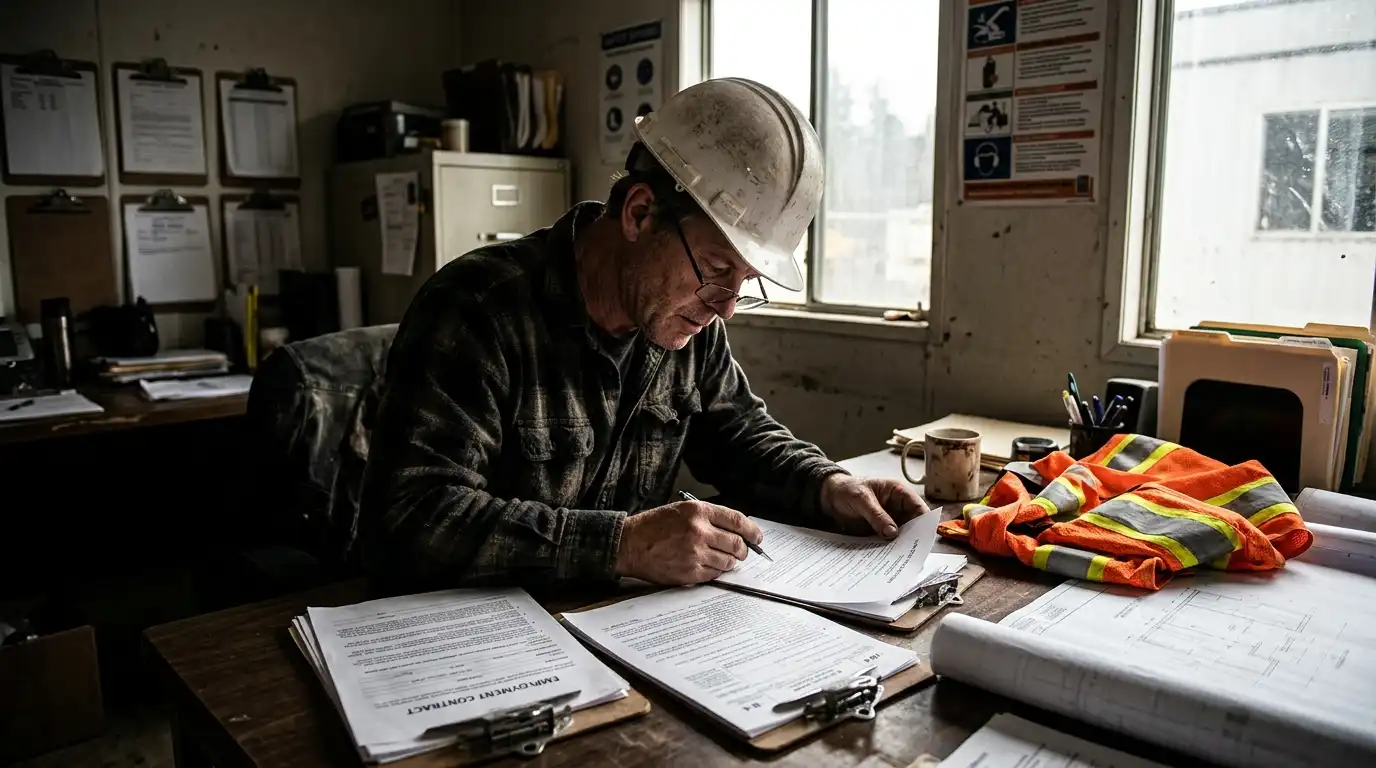
As of January 1, 2026, the financial landscape of California’s private construction sector has been fundamentally altered. Two landmark pieces of legislation—Senate Bill 61 (SB 61) and Senate Bill 440 (SB 440)—have officially taken effect, ending decades of “predatory retention” and “infinite change order delays.” While these are often viewed as accounting or contract issues, they have a direct, measurable impact on jobsite safety and personal injury liability.
When cash flow is restricted, safety is often the first thing to be sacrificed. By capping retention and forcing timely payments for extra work, California is indirectly forcing a higher standard of site maintenance. If you were injured on a site where payments were being withheld or change orders were ignored, these new laws may provide the “missing link” in proving employer negligence.
SB 61: The New 5% Retention Cap in Private Construction
 For years, private developers in California could withhold 10% or more of a contractor’s pay as “retention” until the very end of a project. On a multi-million dollar build, this meant subcontractors were often operating “in the red” for months, struggling to afford high-quality safety equipment or specialized supervisors.
SB 61 changes the game by adding Civil Code Section 8811. This law caps retention at 5% for most private construction contracts signed on or after January 1, 2026. This aligns private work with the standards already seen in public works. The goal is simple: keep money flowing to the people doing the actual work.
Why Cash Flow Equals Safety
In the construction industry, safety costs money. Stable cash flow allows subcontractors to:
- Invest in Modern Gear: Contractors can afford certified fall protection and scaffolding rather than “making do” with aging, dangerous equipment.
- Retain Skilled Labor: Stable pay allows contractors to keep experienced workers who know safety protocols, rather than relying on inexperienced, lower-wage labor who are statistically more likely to be injured.
- Maintain Equipment: Preventive maintenance on heavy machinery is often deferred when a company is waiting on a 10% retention check that is months overdue.
SB 440: The Private Works Change Order Fair Payment Act
Perhaps even more significant for injury liability is SB 440 (codified at Civil Code §§ 8850–8859). Previously, when a dangerous condition was found on-site—such as unstable soil or faulty wiring—that wasn’t in the original plans, a contractor would submit a “change order.” Owners would often take months to approve the pay for this extra work, forcing contractors to either work around the hazard or perform the fix while “floating” the cost.
Under the new 2026 framework, the process is now strictly regulated:
- 30-Day Response: Once a written claim for a change order is submitted via certified mail, the owner must respond within 30 days.
- 60-Day Payment: Any undisputed portion of that change order must be paid within 60 days of the response.
- 24% Annual Interest: Late payments accrue interest at 2% per month.
The Right to Stop Work: A New Safety Shield
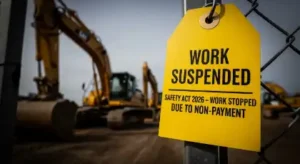 The most consequential feature of SB 440 is the statutory right to suspend work. If an owner fails to pay undisputed amounts or follow the timeline, a contractor can provide a 10-day notice and legally walk off the job without penalty.
From a legal perspective, if a subcontractor identifies a safety hazard, requests a change order to fix it, and is denied payment—yet continues to work—the liability shifts. In a 2026 injury claim, we can now point to SB 440 to show that the owner’s financial negligence (failing to pay for safety fixes) was the “proximate cause” of the worker’s injury.
Exceptions to the 2026 Payment Laws
It is important to note that these laws do not apply to every project. Specifically:
- Small Residential: Most residential projects of four stories or less that are not “mixed-use” are exempt from the 5% cap and the SB 440 timelines.
- Bonding Exceptions: Under SB 61, the 5% cap may not apply if a subcontractor fails to provide a requested performance and payment bond.
How These Laws Impact Your Injury Lawsuit
If you are a worker injured on a site in 2026, our firm investigates the “financial health” of the project. Was the General Contractor (GC) or Owner withholding more than 5%? Were there safety change orders that sat unapproved for over 30 days?
If a site has the cash flow provided by SB 61 and the prompt payments from SB 440, there is zero excuse for a preventable injury. We use these financial “paper trails” to prove that a company prioritized its bank account over the safety of its workers. This is especially relevant in high-risk scenarios like those covered in our guide to 2026 Cal/OSHA Confined Space Standards.
Steps to Take Following a 2026 Construction Accident
- Preserve the Paperwork: Request copies of recent change orders and payment applications to see if safety requests were being ignored.
- Document Hazards: If an injury occurred in an area that was the subject of a disputed change order, that is “smoking gun” evidence. See our guide on how to document a construction accident.
- Consult a Specialized Attorney: Construction law in 2026 requires an understanding of both the Labor Code and the Civil Code.
Conclusion: Holding Contractors Accountable in the New Era
The 2026 payment reforms remove the “we couldn’t afford it” defense for negligent contractors. With increased cash flow and faster payments for safety-critical changes, every construction site in California should be safer. When they aren’t, Construction Injury Lawyer is here to ensure the law works for the victims, not the corporations.