The Evolution of Jobsite Monitoring: From Manual Site Walks to Computer Vision
Historically, jobsite oversight relied on periodic manual inspections conducted by project superintendents or safety managers. Under this model, proving that a general contractor knew about an dangerous condition required showing that a superintendent personally walked past the hazard or received a verbal warning from a trade foreman.
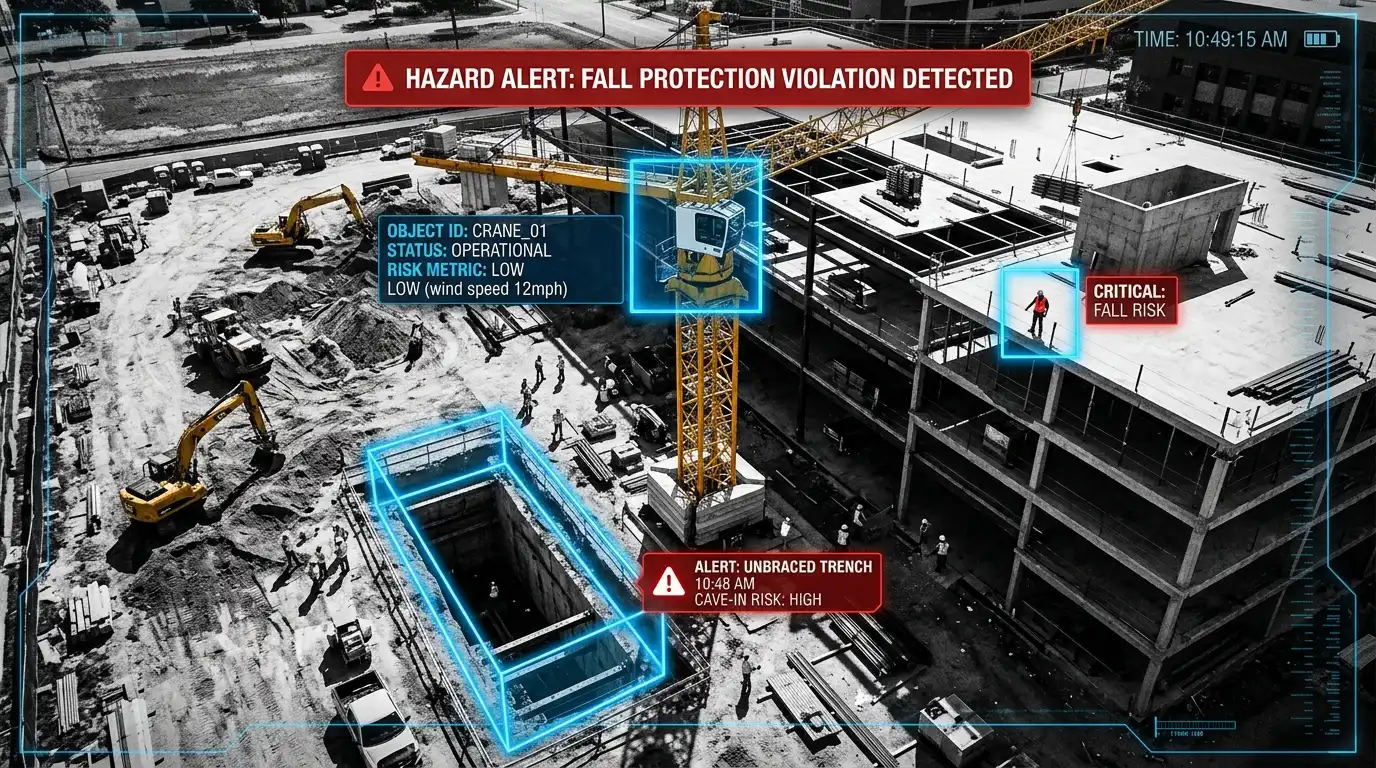
Modern commercial construction sites utilize sophisticated digital surveillance networks. Modern jobsite oversight platforms combine fixed high-definition cameras, site-roving autonomous robots, and aerial drone telemetry with deep-learning computer vision models. These integrated platforms continuously scan jobsites to automatically detect critical safety hazards, including:
- Personal Protective Equipment (PPE) Deficiencies: Automatically flagging workers operating without tied-off fall protection harnesses, hard hats, or high-visibility vests at elevated heights.
- Excavation and Trenching Hazards: Identifying unsloped or unbraced trench walls, missing egress ladders, and heavy machinery operating within danger zones near excavation edges.
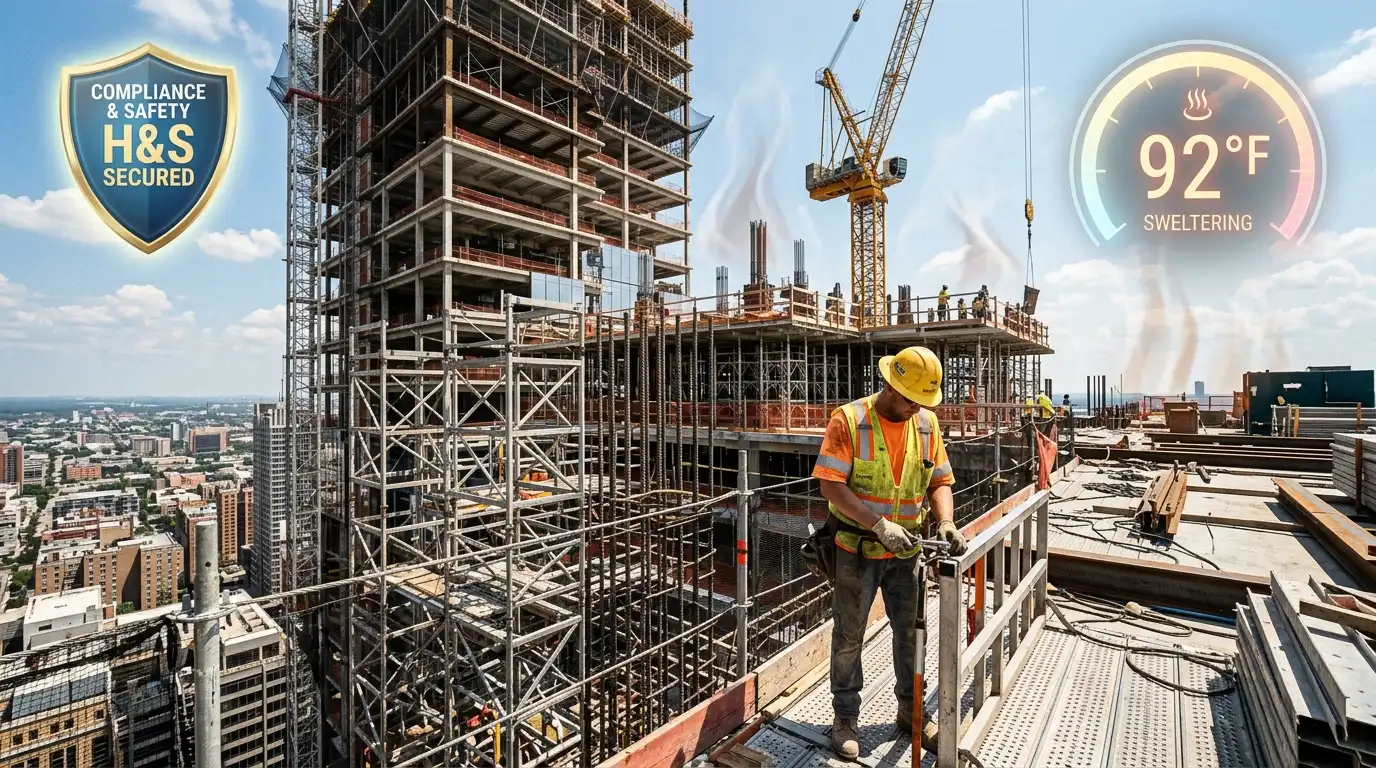
- Structural and Scaffolding Violations: Detecting missing guardrails, unpinned scaffolding planks, and unanchored perimeter safety nets.
- Machine Proximity and Heavy Equipment Hazards: Tracking ground workers entering blind spots around active excavators, tower cranes, or material hoists.
When an AI algorithm identifies a safety anomaly, it immediately generates a real-time hazard alert—pushing automated SMS notifications, dashboard flags, and email alerts directly to the general contractor’s site superintendents and safety directors.
Establishing General Contractor Liability: Actual Digital Notice
To succeed in a personal injury lawsuit against a general contractor—who typically holds general supervisory authority over a multi-employer site—the plaintiff must demonstrate that the GC breached its duty of care. Under OSHA’s Multi-Employer Citation Policy and state common-law negligence standards, a controlling general contractor must exercise reasonable care to prevent and correct jobsite hazards.
Automated AI surveillance shifts the evidentiary framework surrounding notice in three significant ways:
1. Eliminating “Lack of Knowledge” Defenses
When an AI monitoring system logs a fall-protection violation or an unguarded floor opening and pushes a priority notification to the project manager’s tablet at 8:15 AM, the general contractor can no longer claim in court that it was unaware of the dangerous condition when a worker falls at 10:30 AM. The AI alert history provides clear proof of actual, digital knowledge of the hazard hours before the injury occurred.
2. Proving “Alert Fatigue” and Systemic Inertia
In many personal injury cases, forensic data extractions reveal that general contractors received dozens of automated hazard alerts daily but routinely ignored or dismissed them without taking corrective action. Demonstrating a pattern of ignoring automated safety flags establishes a clear record of reckless disregard for worker safety, effectively countering claims of reasonable care.
3. Establishing Non-Delegable Duty and Site Control
General contractors often attempt to insulate themselves from liability by claiming that safety enforcement was delegated entirely to lower-tier subcontractors. However, centralized AI safety dashboards that collect, analyze, and store site-wide risk metrics demonstrate that the general contractor maintained active operational control over jobsite conditions.
Preserving AI Telematics: Critical Spoliation Considerations
 The success of a construction injury claim involving AI surveillance relies heavily on securing raw, unedited digital evidence before automatic retention limits erase the data. Most commercial camera systems and cloud telematics platforms operate on automated rolling retention cycles, permanently overwriting raw video feeds and system logs after 30 to 60 days.
Following a serious construction incident, plaintiff counsel must take immediate legal action to preserve the complete digital footprint:
- Formal Spoliation Letters: Serving immediate, detailed spoliation demands on the general contractor, property owner, site technology vendors, and third-party AI software developers requiring the immediate preservation of all raw video footage, metadata logs, algorithm alert histories, and system audit trails.
- Subpoenaing Algorithmic Detection Logs: Requesting backend database exports that detail every hazard flag generated during the project, including confidence scores, timestamped push notifications, and user response logs showing which managers acknowledged or dismissed the alerts.
- Securing Raw Video Beyond Clipped Highlights: Insurance carriers often attempt to produce only brief, isolated video clips of the collision or fall itself. Plaintiff attorneys must demand uncompressed continuous footage from all site angles for days leading up to the incident to document long-standing hazardous conditions.
Steps Injured Construction Workers Must Take to Protect Their Rights
If you or a loved one suffers an injury on a construction jobsite where automated surveillance or digital monitoring is present, taking prompt action protects both physical health and legal rights:
- Report the Incident and Note Nearby Cameras: Report the injury immediately to site management and take note of any nearby fixed construction cameras, mobile camera trailers, or operating drones in the vicinity.
- Document Hardware and Visual Indicators: If possible, photograph the specific location where the incident occurred, taking care to capture mounted camera units, digital signage boards, or IoT sensor boxes nearby.
- Consult Specialized Legal Counsel Immediately: Engage an experienced construction injury attorney who understands digital forensics and can issue emergency data preservation orders before cloud retention windows expire.
Conclusion
The integration of AI-powered jobsite surveillance and computer vision safety alerts has reshaped accountability on the modern construction site. While general contractors adopt these systems to streamline operations and monitor productivity, they also assume a duty to respond when those systems flag immediate threats to human life. By capturing and analyzing automated hazard logs, injured workers can establish general contractor negligence, overcome traditional notice defenses, and secure fair compensation for severe jobsite injuries.